Table of Contents
- Introduction
- What Was the Hijrah?
- Causes of the Hijrah
- The Journey to Medina
- Welcoming the Prophet in Medina
- Building the First Muslim Community
- Major Events of the Medina Period
- Achievements of the Medina Period
- Free Resources for Study
- Conclusion
- FAQs
1. Introduction
The Hijrah (migration) of Prophet Muhammad (peace be upon him) from Mecca to Medina in 622 CE is a turning point in Islamic history. It not only marked the beginning of the Islamic calendar but also transformed the Muslim community from a persecuted minority to a thriving society.
2. What Was the Hijrah?
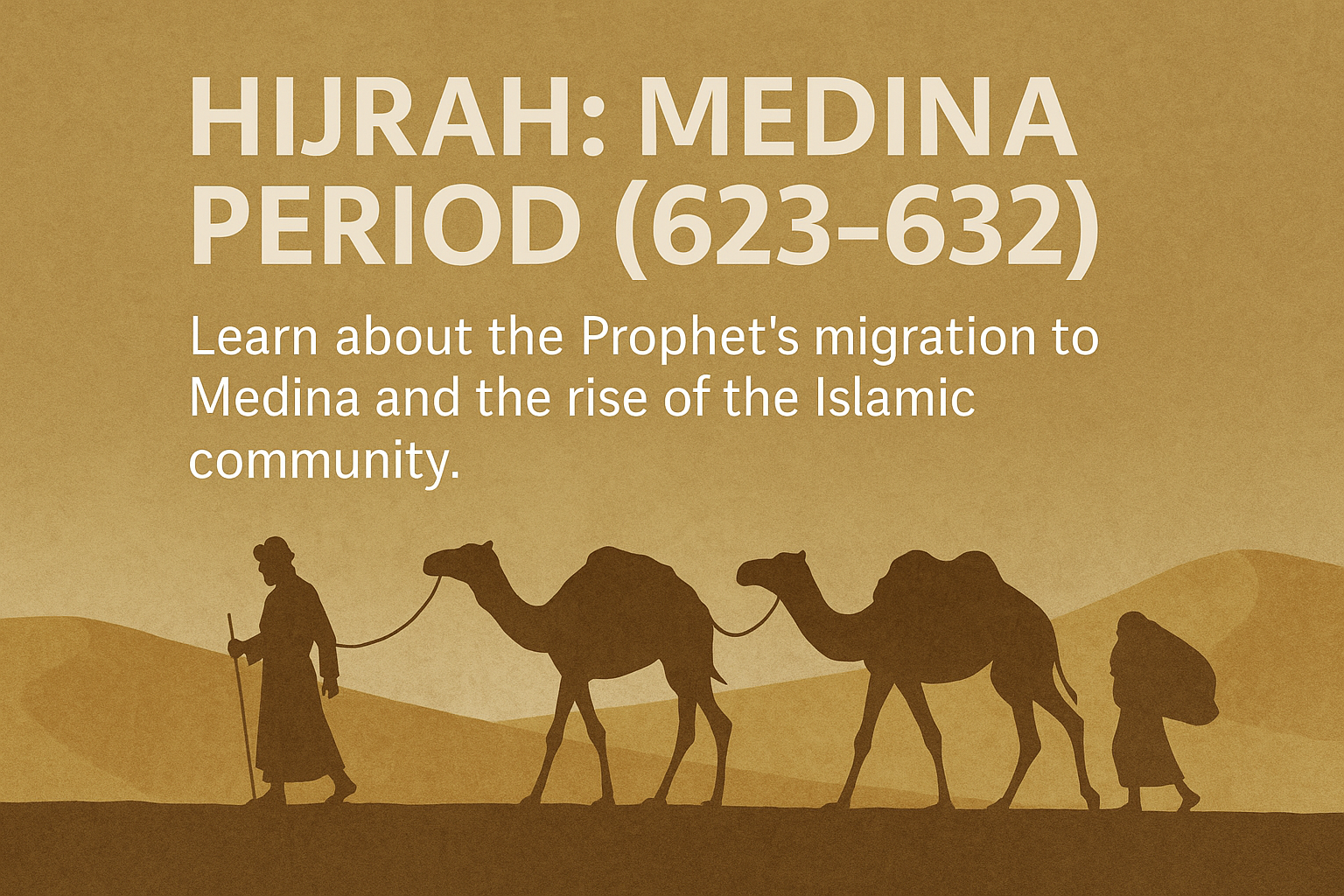
The Hijrah was the migration of the Prophet and his followers from Mecca to Yathrib (later renamed Medina). It was prompted by years of persecution and the need for a safe place to practice Islam.
3. Causes of the Hijrah
- Persecution in Mecca: Physical and economic abuse by Quraysh.
- Plot to Assassinate the Prophet: Quraysh leaders planned to kill Muhammad.
- Invitation from Medina: Leaders of Medina pledged support at the Pledges of Aqabah.
4. The Journey to Medina
- The Prophet traveled with Abu Bakr al-Siddiq.
- They hid in the Cave of Thawr for three days to avoid capture.
- Upon arrival, the Prophet was welcomed warmly by the people of Medina.
5. Welcoming the Prophet in Medina
The people of Medina, known as Ansar (helpers), embraced the Muhajirun (migrants from Mecca). This unity between the two groups became a foundation of the new Muslim society.
6. Building the First Muslim Community
- Construction of Masjid al-Nabawi: Center of worship, education, and governance.
- Medina Charter: Established religious freedom and mutual responsibility among Muslims, Jews, and other communities.
- Brotherhood Pacts: Paired migrants with locals for economic and social support.
7. Major Events of the Medina Period
- Battle of Badr (624 CE): First major Muslim victory.
- Battle of Uhud (625 CE): A setback due to disobedience but a lesson in unity.
- Battle of the Trench (627 CE): Defensive strategy that saved Medina.
- Treaty of Hudaybiyyah (628 CE): A peaceful agreement with Quraysh.
- Conquest of Mecca (630 CE): Ended Quraysh opposition.
- Farewell Pilgrimage (632 CE): Prophet’s final sermon.
8. Achievements of the Medina Period
- Establishment of an Islamic state governed by Quranic principles.
- Religious tolerance with formal agreements.
- Social reforms including women’s rights and care for the poor.
9. Free Resources for Study
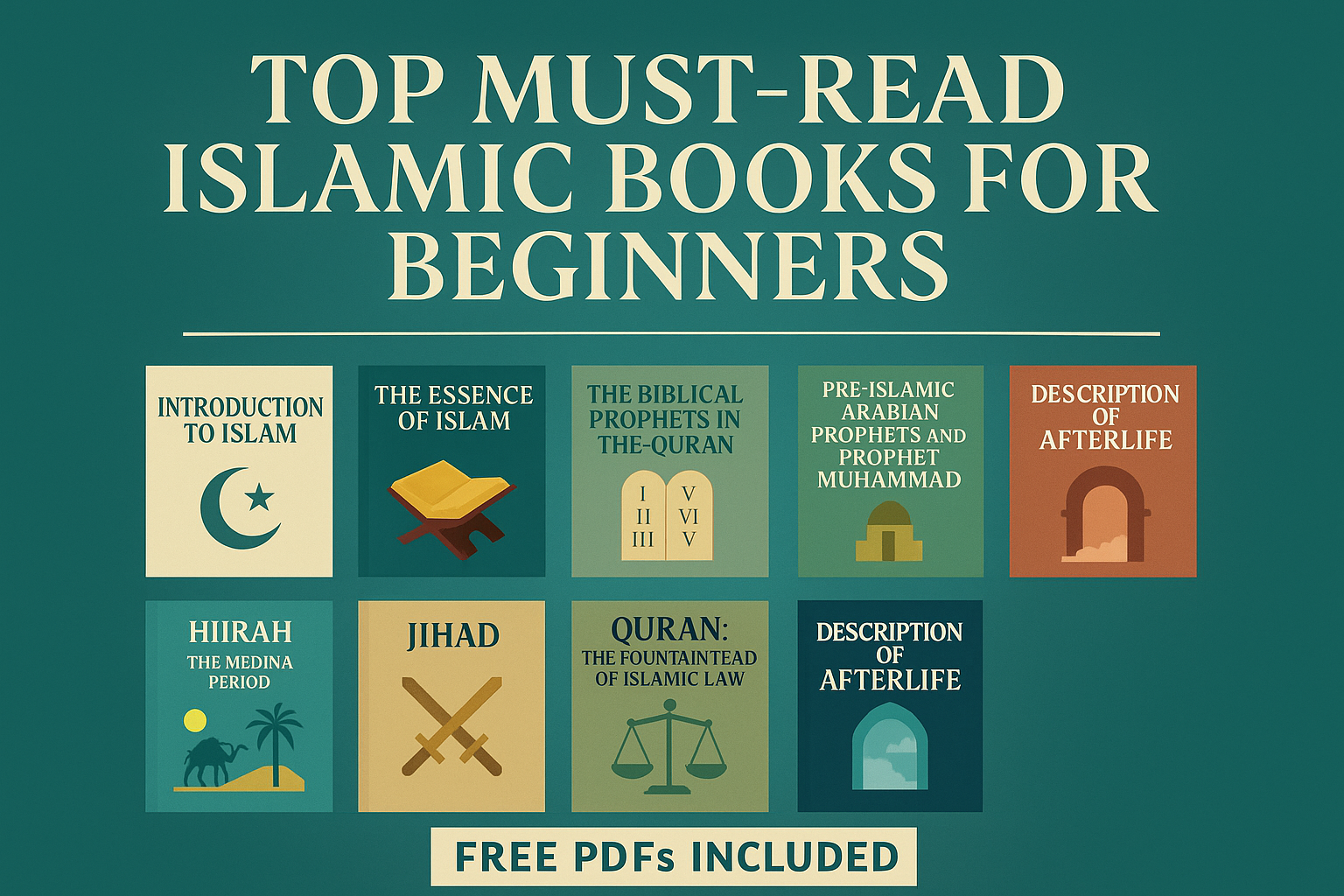
📘 Hijrah – Medina Period (623–632) – Download PDF | Buy on Amazon
Also recommended:
- The Essence of Islam – Download PDF
- Introduction to Islam – Download PDF
10. Conclusion
The Hijrah was more than a migration; it was the beginning of a new era for Islam. The Medina period established the foundations of Islamic governance, unity, and justice.
📥 Read more by downloading our free books at thequranforfree.com
11. FAQs
Q: Why is the Hijrah important in Islam?
A: It marks the start of the Islamic calendar and the establishment of a Muslim community.
Q: Who were the Ansar and Muhajirun?
A: Ansar were the residents of Medina, Muhajirun were migrants from Mecca.
Q: What is the Medina Charter?
A: A treaty ensuring cooperation and religious freedom among Medina’s communities.
Q: Where can I learn more about the Medina period?
A: Download our free book Hijrah – Medina Period from our site.