Introduction
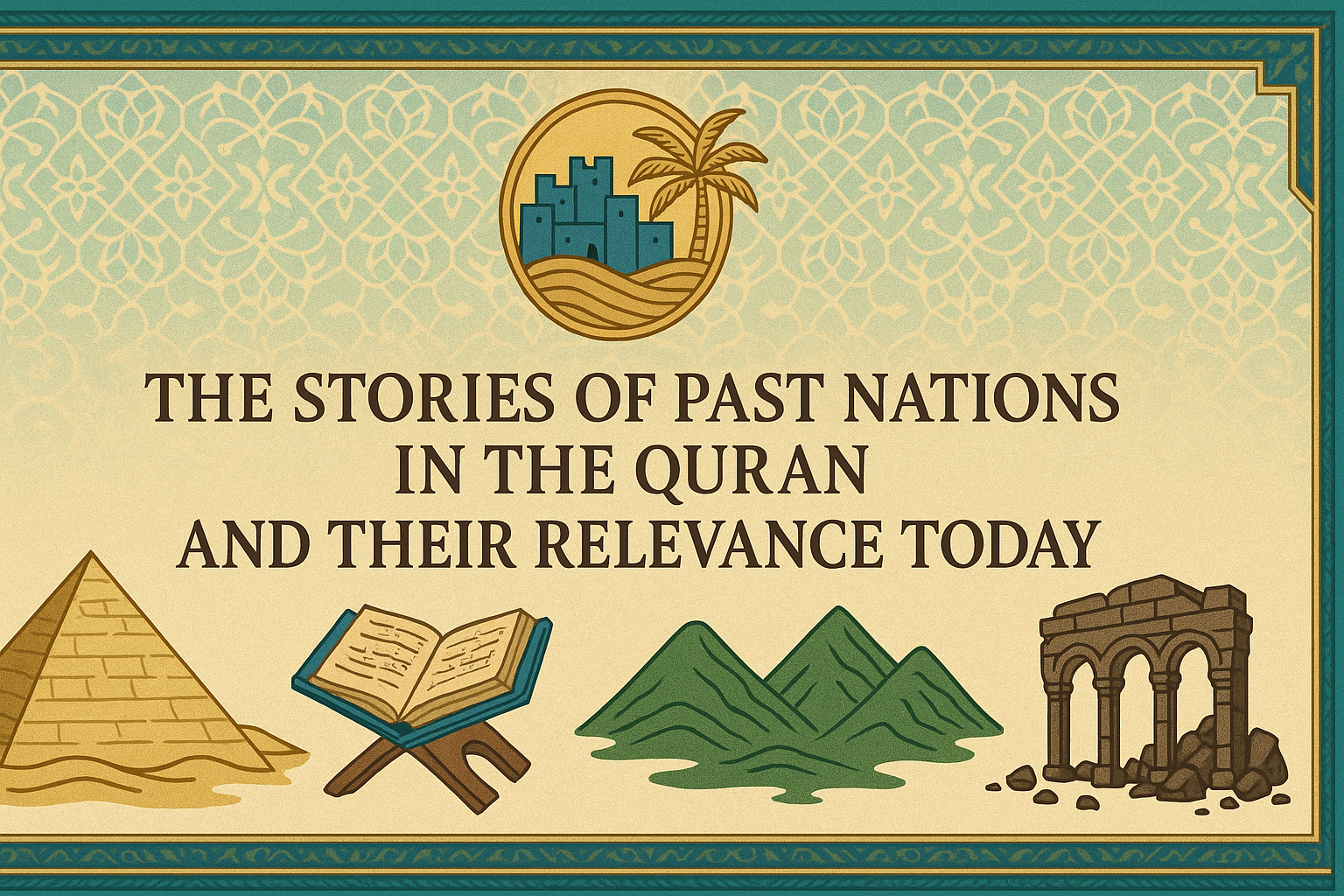
The Quran does not narrate the stories of past nations as mere historical records. Instead, it presents them as living lessons—patterns of human behavior, consequences of moral corruption, and examples of how divine guidance shapes societies.
Allah reminds us:
“In their stories is a lesson for those of understanding.”
(Surah Yusuf 12:111)
Every nation mentioned in the Quran—whether saved or destroyed—teaches universal truths about faith, justice, gratitude, arrogance, and human behavior. Their rise and fall reveal spiritual laws that apply across all times, cultures, and civilizations.
This article explores the major nations discussed in the Quran and the timeless lessons they hold for today’s world.
1. Why the Quran Mentions Past Nations
Allah repeatedly calls our attention to the fate of earlier peoples:
“Travel through the earth and see what was the end of those who denied the truth.”
(Surah Ar-Rum 30:9)
Purposes of these stories include:
- moral reflection
- historical awareness
- spiritual awakening
- warning and guidance
- strengthening believers
These stories help Muslims understand the spiritual laws that govern the rise and fall of societies.
2. The People of Nuh (Noah): Arrogance and Rejection of Guidance
Prophet Nuh preached for centuries, yet his people persisted in disbelief.
“They put their fingers in their ears, covered themselves with their garments, persisted, and were arrogant.”
(Surah Nuh 71:7)
Lessons for today:
- Arrogance blinds people from truth
- Widespread corruption destroys societies
- A small group of sincere believers can be saved
- Patience in da’wah is essential
Modern parallels include environmental neglect, moral decay, and dismissal of spiritual warnings.
3. The People of ‘Ad: Power Without Gratitude
‘Ad were a physically strong and technologically advanced nation.
“Who is stronger than us?”
(Surah Fussilat 41:15)
Their downfall came from pride and denial of Prophet Hud (AS).
Lessons:
- Power becomes destructive without humility
- Civilizations collapse when arrogance replaces gratitude
- Natural disasters can reflect moral decline
Today, superpowers must learn that strength alone does not guarantee survival.
4. The People of Thamud: Prosperity Without Obedience
Thamud carved homes into mountains and lived in great comfort. When they denied Prophet Salih (AS), Allah destroyed them with a mighty blast.
“So the earthquake seized them, and they fell lifeless in their homes.”
(Surah Al-A‘raf 7:78)
Lessons:
- Economic success is not a sign of divine pleasure
- Ignoring moral and spiritual values leads to collapse
- Miracles do not benefit those who refuse reflection
Their downfall mirrors modern societies built on wealth but lacking faith.
5. The People of Madyan: Corruption in Trade
Prophet Shu‘ayb (AS) condemned his people’s dishonest business practices.
“Give full measure and weight, and do not deprive people of their rights.”
(Surah Hud 11:85)
They refused and were destroyed.
Lessons:
- Economic injustice invites divine punishment
- Cheating, fraud, and exploitation harm entire societies
- Ethical business is part of Islamic spirituality
Today, global financial crises show the consequences of greed.
6. The People of Lut: Moral Corruption and Social Decay
Lut’s people engaged openly in indecent behavior:
“You approach men with desire instead of women.”
(Surah Al-A‘raf 7:81)
Despite warnings, they persisted and were destroyed.
Lessons:
- Societies that normalize immorality face severe consequences
- Public sin invites public punishment
- Maintaining family structure is essential for stability
Modern moral confusion resembles their society in striking ways.
7. The People of Egypt Under Pharaoh: Tyranny and Oppression
Pharaoh oppressed the Israelites, committed genocide, and claimed divinity.
“I am your Lord, the Most High.”
(79:24)
Allah drowned him as a sign:
“So We made him an example for those who come after.”
(43:56)
Lessons:
- Oppression does not last
- Leaders who abuse power face destruction
- Allah supports the oppressed
Tyranny still exists today—these stories remind us of Allah’s justice.
8. Banu Isra’il: Blessings, Tests, and Human Weakness
The Israelites experienced:
- miracles
- liberation
- divine guidance
Yet they repeatedly fell into disobedience:
- worshipping the calf
- rejecting prophets
- breaking covenants
Lessons:
- Spiritual discipline must be constant
- Time does not guarantee righteousness
- Faith requires obedience, not just identity
Their story reflects the struggles of any community blessed with knowledge yet tested with weakness.
9. The People of Saba’: Wealth and Complacency
Saba’ enjoyed immense prosperity and lush gardens.
“Eat of your Lord’s provision and be grateful.”
(34:15)
But they grew complacent and ungrateful. Allah destroyed their irrigation system, collapsing their civilization.
Lessons:
- Gratitude sustains blessings
- Environmental disasters can mirror moral imbalance
- Wealth requires responsibility
This story resonates with today’s environmental crises.
10. The Relevance of These Stories in the Modern World
1. Moral decline precedes societal collapse
Every destroyed nation suffered spiritual decay before physical destruction.
2. Arrogance is a universal threat
Every nation destroyed showed pride in:
- wealth
- technology
- military strength
- cultural superiority
3. Justice is the foundation of social stability
Corruption, exploitation, and oppression marked many past nations.
4. Divine laws are timeless
What destroyed past civilizations can destroy modern ones.
5. Guidance is for reflection, not entertainment
These are warnings, not stories to admire.
6. Allah’s mercy is vast
Every story includes opportunities for repentance before punishment.
11. How Individuals Can Apply These Lessons Today
- Prioritize spiritual life over materialism
- Avoid arrogance, even in success
- Stand against injustice and corruption
- Maintain moral boundaries
- Practice ethical business and fairness
- Be grateful for blessings
- Strengthen family values
- Learn from history instead of repeating it
The Quran empowers believers with the knowledge to build righteous lives and resilient societies.
Recommended Books from The Quran Foundation Library
• Nations Before You: Quranic Lessons From History
📘 Free PDF: https://thequranforfree.com/ebooks
📗 Amazon Hardcopy: https://www.amazon.com/s?k=The+Quran+Foundation
• Tafseer al-Quran: Stories of Past Peoples (Urdu & English Editions)
📘 Free PDF: https://thequranforfree.com/ebooks
📗 Amazon: https://www.amazon.com/s?k=Tafseer+al-Quran
Conclusion: The Quran’s Historical Warnings Are Messages for Today
The stories of past nations are not relics of ancient history — they are mirrors for our modern world. They reveal patterns of:
- arrogance
- corruption
- moral decline
- injustice
- ingratitude
But they also highlight:
- hope
- patience
- repentance
- divine mercy
- spiritual resilience
Whoever reflects on these stories gains wisdom to navigate today’s challenges with clarity and faith.
➡️ Explore more free Tafseer books and Quranic resources:
https://thequranforfree.com/ebooks